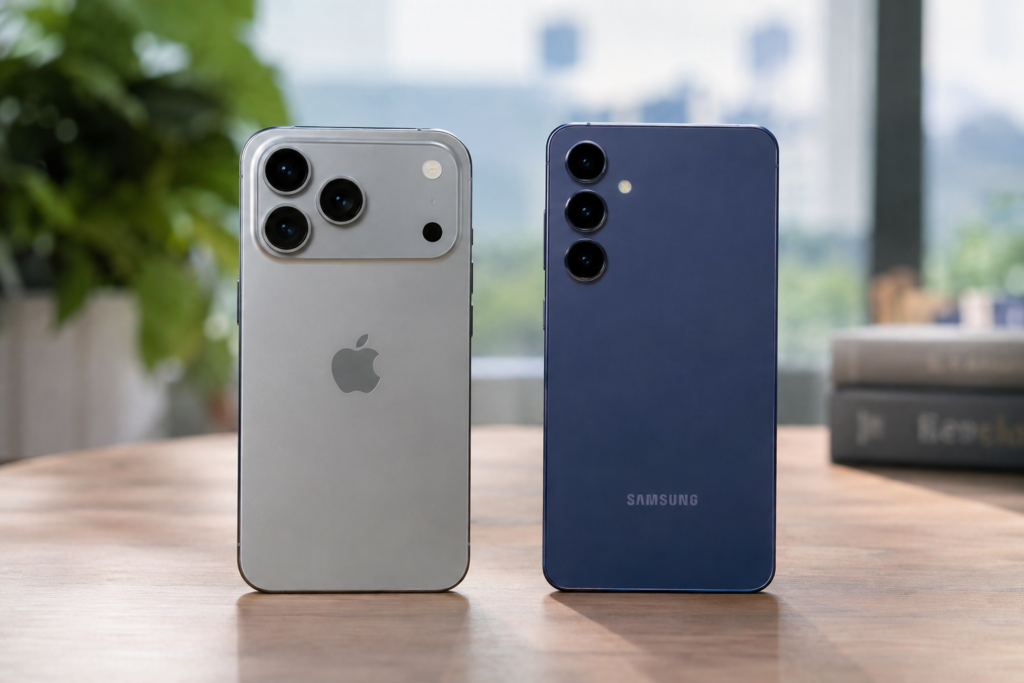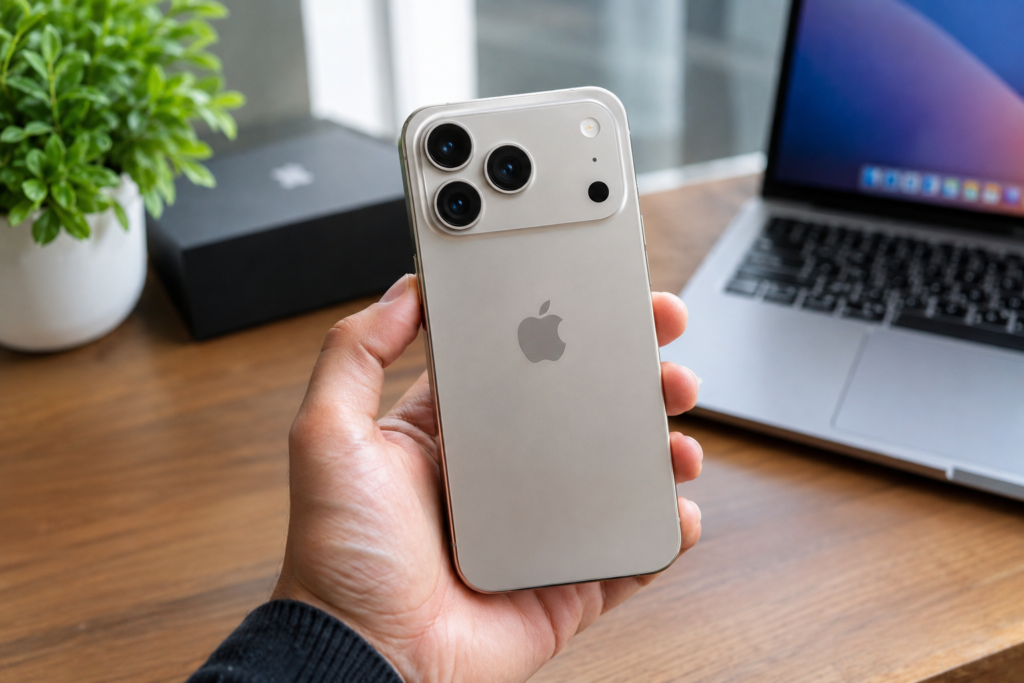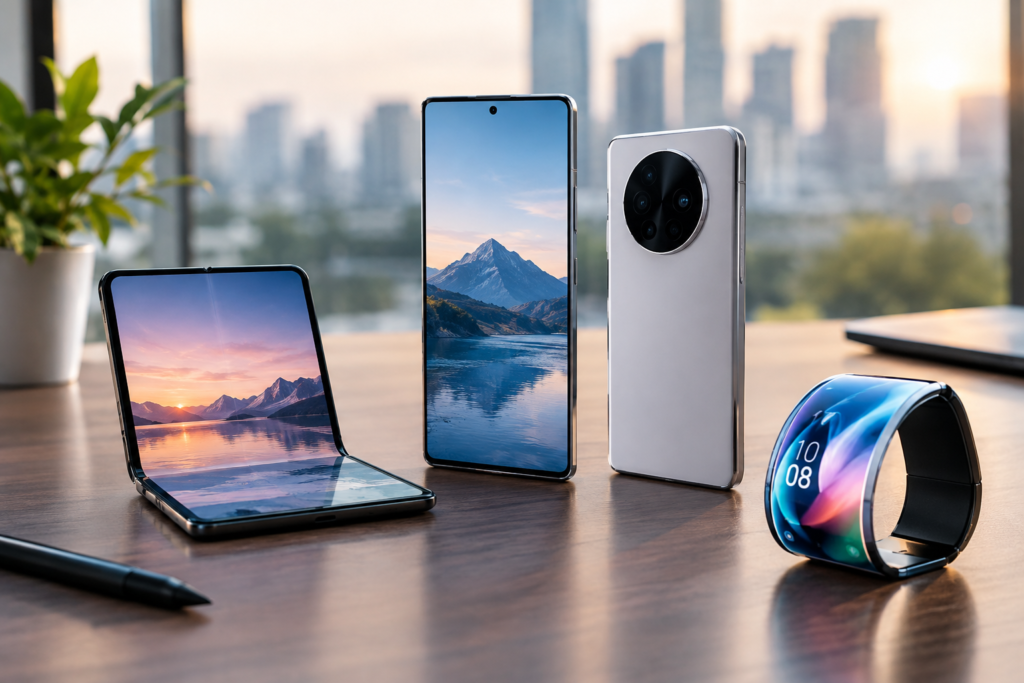
Smartphones have changed dramatically over the past decade, but the next five years could bring a different kind of evolution. Instead of simply adding bigger cameras, faster processors, or higher-resolution displays, phone makers are likely to focus more on how a smartphone fits into everyday life.
By around 2031, smartphones may become thinner, more flexible, more efficient, and less dependent on traditional touchscreens. Some changes are already visible in current devices, while others remain possibilities rather than confirmed products.
So, what will smartphones look like in the next five years? The answer will probably involve a combination of better displays, improved artificial intelligence, longer battery life, more advanced cameras, new materials, and alternative ways of interacting with a phone.
Thinner and More Refined Smartphone Designs
The basic rectangular smartphone is unlikely to disappear completely within five years. It is practical, familiar, and works well for watching videos, browsing websites, gaming, and using apps.
However, smartphones could become noticeably thinner and lighter as manufacturers improve internal components.
One challenge is that modern phones contain many parts packed into a small space, including cameras, batteries, processors, speakers, antennas, and cooling systems. Making these components smaller without reducing performance could allow manufacturers to create slimmer designs.
Future smartphones may also have smaller bezels around the display. Instead of a large visible frame, the screen could cover almost the entire front of the device.
Durability may receive more attention as well. Manufacturers are likely to continue developing stronger glass, metal alloys, and other materials that can withstand everyday drops and scratches.
Foldable and Flexible Phones Could Become More Common
Foldable smartphones are already available, but they remain a separate category rather than the standard phone design.
Over the next five years, foldable technology could become more practical if manufacturers improve durability, thickness, battery efficiency, and hinge designs.
A foldable phone can provide a larger screen without requiring a permanently large device. A phone that fits comfortably in a pocket could potentially open into something closer to a small tablet.
More Than One Folding Style
Future designs may include phones that fold vertically, horizontally, or in other configurations. Rollable displays are another possibility, although their long-term success is not yet certain.
The important change would not simply be the ability to fold a screen. The software would also need to adapt automatically to different screen sizes and positions.
If these improvements continue, flexible displays could become one of the most noticeable changes in smartphone design during the next five years.
Smartphone Displays Could Become More Adaptive
Display technology is likely to keep improving, but the focus may move beyond simply increasing resolution.
Future screens could become brighter, more power-efficient, and easier to see outdoors. Manufacturers may also continue improving refresh rates and adaptive display technology so that the phone uses power according to what is happening on the screen.
For example, a phone might use a lower refresh rate while displaying a static webpage and increase it automatically during gaming or scrolling.
Another possible development is better integration of cameras and sensors beneath the display. If this technology continues improving, front-facing cameras and other sensors could become less noticeable.
Batteries Will Remain a Major Focus
Battery life is one of the biggest limitations of smartphones. Faster processors, brighter displays, advanced cameras, and constant connectivity all require energy.
Over the next five years, improvements could come from several directions rather than one dramatic battery breakthrough.
Battery materials may continue to evolve, while processors and displays become more efficient. Software can also reduce unnecessary background activity and manage power more intelligently.
Charging could become faster as well, although manufacturers still need to balance charging speed with heat, battery health, and safety.
For many users, the most meaningful improvement may not be a phone that charges in an extremely short time. It could simply be a phone that comfortably lasts through a full day of heavy use and maintains good battery health for longer.
Cameras Will Become More Computational
Smartphone cameras have already moved far beyond basic hardware. Modern phones combine lenses, sensors, image processing, and software to produce the final photograph.
That trend is likely to continue.
Instead of relying entirely on larger camera sensors, future smartphones may use increasingly sophisticated computational photography to process images. A phone could combine multiple frames, improve difficult lighting conditions, reduce unwanted noise, and preserve details more effectively.
Better Zoom Without Huge Camera Modules
Zoom is another area where manufacturers are likely to keep competing.
Traditional digital zoom can lose image quality because it enlarges existing pixels rather than capturing additional optical detail. Smartphone companies have therefore explored combinations of optical zoom, periscope-style camera systems, and software processing.
Future phones may deliver better long-distance photographs while keeping camera modules relatively compact.
However, camera improvements will not necessarily mean every smartphone needs four or five lenses. Manufacturers may instead focus on making a smaller number of cameras more capable.
AI Will Change How People Use Smartphones
One of the biggest changes in smartphones over the next five years could happen inside the software rather than the hardware.
AI-powered features are already being introduced into phones for tasks such as image editing, translation, summarization, writing assistance, and voice interaction.
Future smartphones may handle more of these tasks directly on the device.
That could allow a phone to understand a user’s habits and provide more useful assistance without requiring constant interaction with individual apps.
For example, instead of opening several applications to organize information, a user could ask the phone to find a particular document, summarize it, translate part of it, and prepare the information for sharing.
The exact capabilities will depend on future software, hardware, privacy policies, and how users choose to interact with these systems.
Smartphones May Depend Less on Apps
The traditional smartphone experience is built around apps. Users open a browser, messaging app, camera, maps application, banking app, and many other services separately.
That model could gradually change.
More advanced software assistants may allow users to request an outcome instead of manually navigating through multiple applications.
For example, someone might ask for directions to a location, receive travel information, and then share the route with a contact through a simple command.
This does not necessarily mean apps will disappear. Instead, smartphones may become better at connecting different services behind the scenes.
More Features Could Work Without an Internet Connection
As smartphone processors become more capable, some advanced functions may run locally on the device rather than relying entirely on remote servers.
This could be useful for translation, image processing, voice recognition, document analysis, and other tasks.
Local processing can also have privacy benefits because certain information may not need to leave the phone for processing. However, privacy will still depend on how manufacturers design their software and handle user data.
The balance between on-device processing and cloud services is likely to remain an important part of future smartphone development.
Connectivity Will Keep Improving
Smartphones in the next five years will likely support increasingly advanced mobile networks and wireless technologies.
Faster connectivity can make cloud services, video calls, online gaming, streaming, and large file transfers more convenient. However, real-world performance will continue to depend on network availability, location, carrier infrastructure, and the user’s plan.
Future phones may also communicate more smoothly with other devices around them.
Instead of operating as completely separate products, smartphones could work more closely with laptops, tablets, cars, watches, headphones, smart-home devices, and other connected products.
The Smartphone May Become Less Central
Perhaps the most interesting possibility is that the smartphone itself may become less visible in everyday technology.
Smart glasses, smartwatches, earbuds, voice interfaces, and other connected devices could take over some tasks currently performed directly on a phone.
That does not necessarily mean smartphones will disappear. A smartphone could become the central device that manages and connects these products while users interact with technology through several different interfaces.
For example, a person could receive information through earbuds, see navigation through glasses, and use the phone mainly for tasks that require a larger screen.
What Probably Will Not Change
Despite all these developments, some smartphone features are likely to remain important.
People will still need comfortable screens, reliable communication, cameras, long battery life, storage, security, and easy access to essential applications and services.
The touchscreen smartphone has become extremely practical, so manufacturers have little reason to abandon the basic concept unless a better alternative becomes genuinely convenient.
The future may therefore be less about replacing the smartphone and more about making it smarter, more efficient, and better connected.
Conclusion
The smartphones of the next five years are likely to look familiar at first glance, but the technology inside them could be very different.
Thinner designs, improved batteries, flexible displays, better cameras, faster connectivity, and more powerful on-device processing may gradually become normal features. AI could also change the way people interact with their phones, making some tasks more conversational and automated.
Not every predicted technology will become mainstream, and some developments may take longer than expected. What is more certain is that smartphone manufacturers will continue searching for ways to make devices more useful without making them harder to carry or use.
By around 2031, the biggest smartphone changes may not be about having the most impressive specifications. They may be about how naturally the device fits into everyday life.